

Losing a tooth, or several, puts a decision in front of you that most people are not ready for. The options sound similar in casual conversation. The real-world differences in cost, longevity, daily comfort, and recovery are large. At Seasons Dental in Burley, Drs. Chad and Ty Bodily walk patients through this choice every week, and the right answer is rarely the same twice. Age, bone health, budget, how many teeth are missing, and how soon you need to chew on that side of the mouth all factor in.
Knowing what each option actually involves before the consultation makes that conversation much shorter and much more useful.
What Each Option Really Is
A dental implant is a titanium post placed into the jawbone, with a crown attached on top once the bone has healed around it. It replaces the root of the tooth as well as the visible part. A bridge is a row of connected crowns, with the missing tooth filled in between two real teeth that get shaved down and capped to hold it in place. A denture is a removable appliance that sits on the gums and is held by suction, clasps, or in some cases by implants underneath.
The differences below come up in almost every consultation.
Side by Side: What to Expect from Each
Dental Implants
A single implant in Idaho typically runs in the range of $3,000 to $5,000 once the post, abutment, and crown are accounted for. Full-arch implant work costs more.
The timeline is the longest of the three. After the post is placed, the bone needs three to six months to grow around it. The final crown goes on after that healing. Once finished, an implant functions like a natural tooth. It can be brushed and flossed the same way. Most studies put the success rate above ninety-five percent at ten years, and many implants last the rest of the patient’s life.
Implants ask for enough healthy jawbone to anchor the post. Patients who have been missing a tooth for years sometimes need a bone graft first, which adds time and cost. Heavy smokers and patients with uncontrolled diabetes face lower success rates and a longer conversation before going forward.
Dental Bridges
A traditional three-unit bridge usually falls between $2,500 and $4,500, depending on the material. It takes two appointments over a few weeks, not months. There is no surgery involved.
The trade-off sits in what happens to the two healthy teeth on either side. They get reduced to anchor the bridge, which means they are committed to that role for life. Bridges typically last ten to fifteen years before they need replacement, and the anchor teeth carry a higher risk of decay underneath the crowns because flossing under the bridge takes a special technique.
Bridges work well when the teeth next to the gap already need crowns for other reasons, or when a patient is not a candidate for implants and wants something fixed in place rather than removable.
Dentures
A full conventional denture is the most affordable option up front, often between $1,500 and $4,000 per arch. Partial dentures, which fill in only the missing teeth and clip onto the remaining ones, fall in a similar range.
Dentures come out at night. They take some getting used to in the first few months, both for chewing and for speech. Bite force with a denture is roughly a quarter of what a natural tooth or implant can produce, which changes what is comfortable to eat. The jawbone underneath a denture slowly shrinks over the years because the bone no longer has a root stimulating it, and the denture eventually needs to be relined or remade to fit the changing shape.
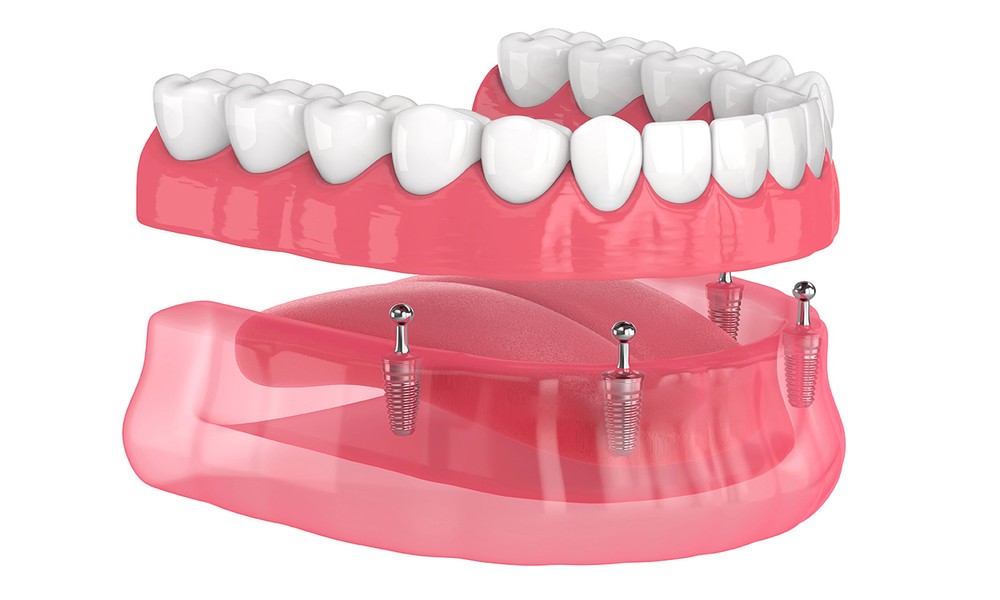
Implant-supported dentures sit in a middle category. Two to four implants hold the denture in place so it does not move during eating or speaking. The cost is higher than a traditional denture, lower than a full arch of single implants, and the bite force and bone preservation are much closer to natural teeth.
Picking the Option That Fits Your Situation
A few patterns come up over and over in the chair.
A single missing tooth, with healthy neighbors and enough bone, is almost always best replaced with an implant. Reducing two perfectly good teeth to hold a bridge for one missing one rarely makes sense if implants are on the table.
Several teeth missing in a row, with the surrounding teeth already weak or already crowned, often points to a bridge. The work to install one is faster and less invasive than placing three implants.
A full arch of missing or failing teeth, especially in older patients, usually comes down to traditional dentures versus implant-supported dentures. The first is faster and cheaper. The second feels closer to real teeth and preserves the jawbone, but the upfront cost is higher.
A patient on a tight budget who needs something now, with the plan to upgrade later, often starts with a denture or partial and moves to implants over the years as finances allow. That path is entirely reasonable.
What to Bring to the Consultation
A useful consultation goes faster when the patient arrives with a few answers in mind:
- How long the tooth or teeth have been missing
- Any medical conditions or medications that affect healing
- Whether smoking is part of the picture
- A rough sense of budget and timeline
- Whether removable or fixed feels acceptable
A panoramic x-ray taken in the office shows the bone in the area and usually decides quickly whether implants are feasible. From there, the conversation narrows to one or two real choices rather than three abstract ones.
The Right Tooth Replacement Is the One That Fits Your Life
Implants, bridges, and dentures all do the job they were designed for. The right pick depends on the mouth and the person sitting in the chair. The team at Seasons Dental in Burley sees every version of this decision, from a single missing molar to a full mouth reconstruction, and they take the time to lay out the real trade-offs before any work begins. If a missing tooth has been on your mind, the consultation is the cheapest part of the whole process. Start there.